
WEVOLV surfaces who’s worth knowing. Athletes decides whether to connect.
WEVOLV · Product Design · UX Research
WEVOLV is a networking platform designed to help athletes build relationships as they navigate careers abroad. Connect lets athletes discover relevant players and agents, understand the context behind a potential connection and decide whether they want to reach out. The product helps athletes find the right people and information, while giving them control over how they show up and who gets access.
Duration
Design 4 Weeks
Methods
Qualitative interviews, Quantitative survey (n=23), Secondary research & competitive analysis
Tools
Notion, Miro, Figma
WEVOLV had a goal, to help athletes make better connections.
Meet Gabby. She's looking for her next team in France. She knows how to network. What she doesn't have is a way to evaluate whether someone is worth approaching before she puts herself out there.
That boundary, the gap between finding someone and deciding whether to reach out is what everything that follows is solving.
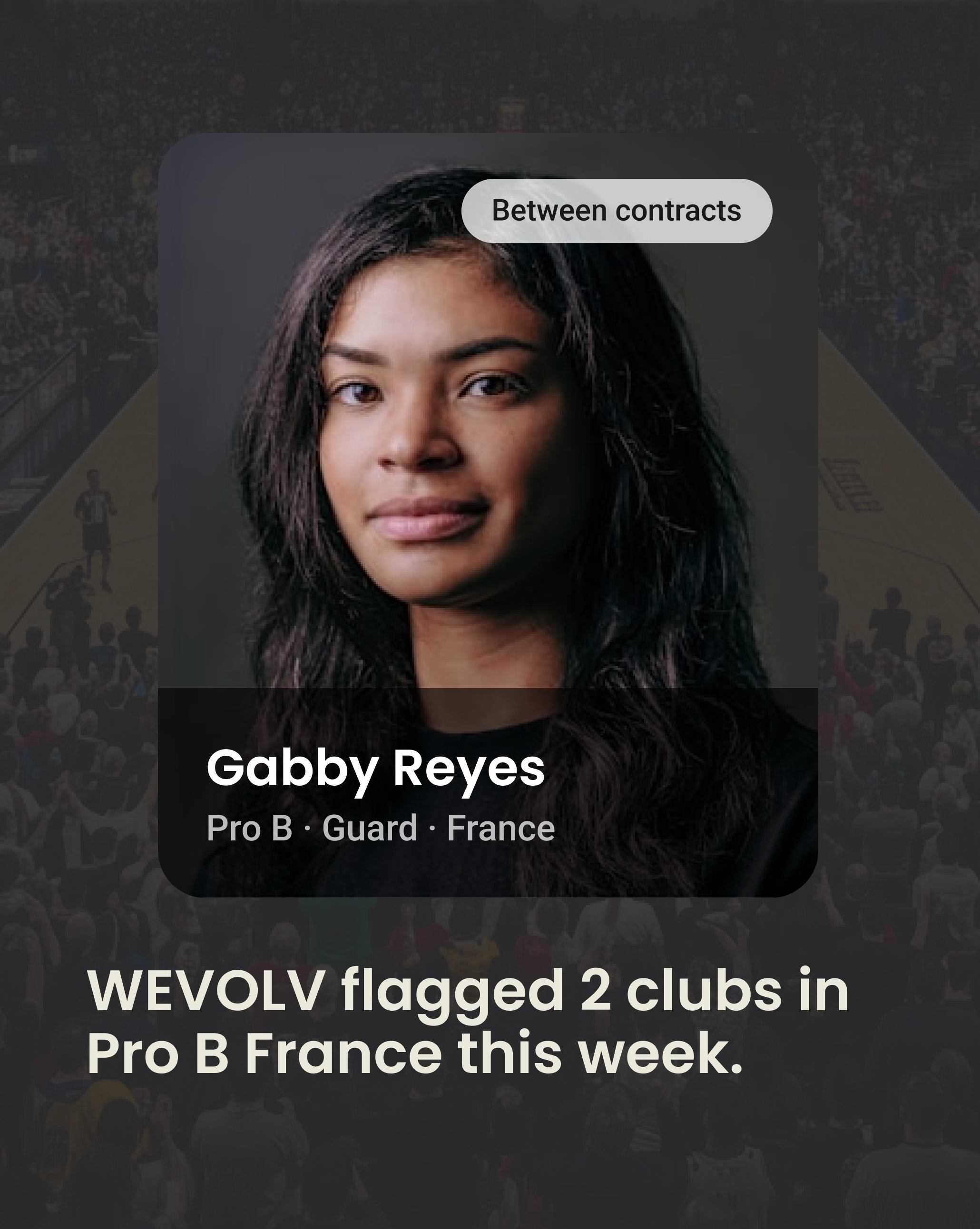
Research changed the problem.
Through seven weeks of research with 23 athletes, I learned that the real problem wasn't finding people, gathering a long list of agent, or chatting back and forth. The hard part was filtering the noise to figure out who was actually worth reaching out to.
This insight changed how I looked at WEVOLV. The product didn't need to speed up communication. It needed to help athletes find the right people for their immediate needs. An athlete looking for a contract has completely different goals than someone who just signed or is figuring out life after sports. Instead of organizing everything by broad career stages, I redesigned the experience around the athlete's exact situation right now.
This idea, context before contact became the foundation for Connect. We need to give athletes enough context to make a smart decision before we ask them to make a connection.
More connections vs. meaningful connections
Most social platforms are built around growing your network. More people, more activity, more connections.
WEVOLV is solving a different problem. For an athlete building a career abroad, the value isn't in having the biggest network. It's in finding the right person, at the right time, with enough context to know whether the connection could actually help.
What I chose: Design Connect around meaningful opportunities, not connection volume.
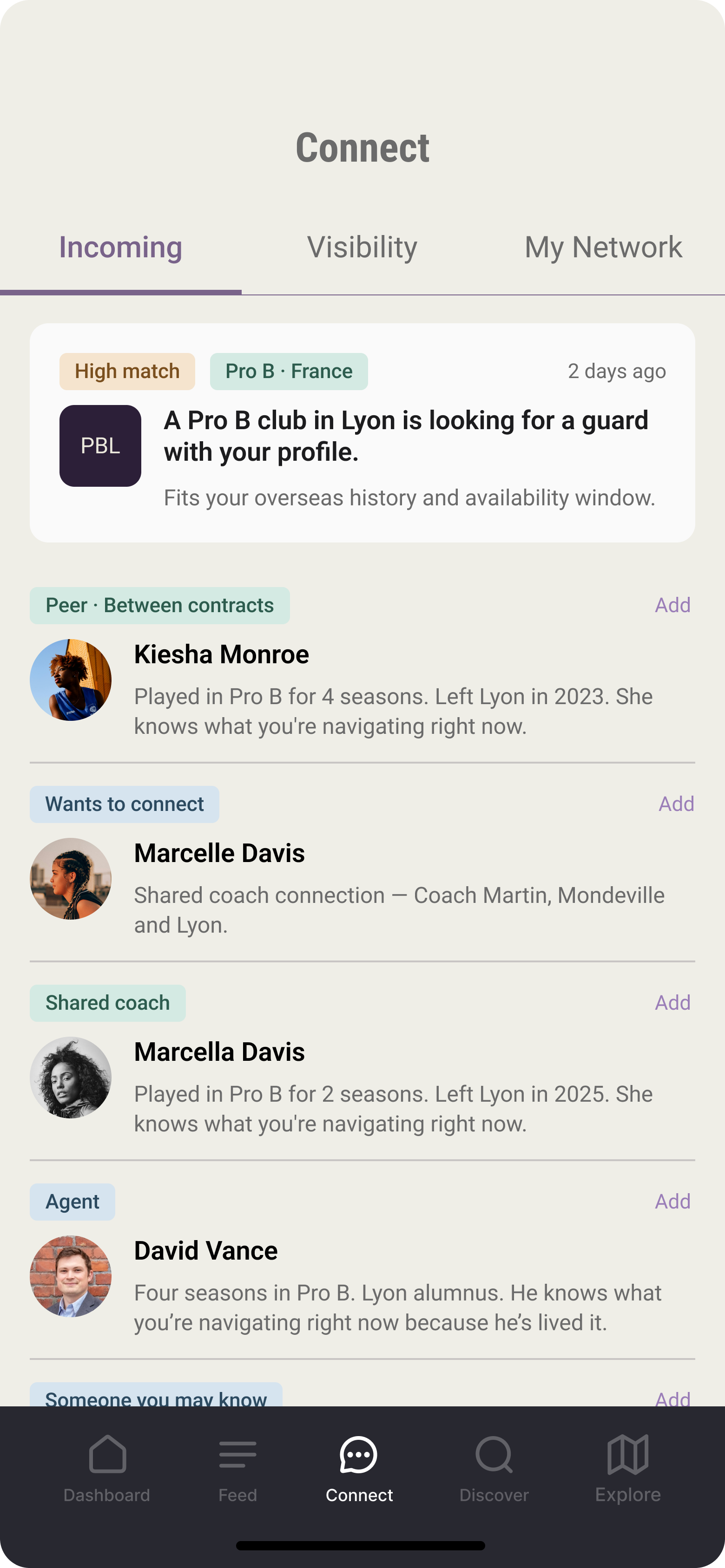
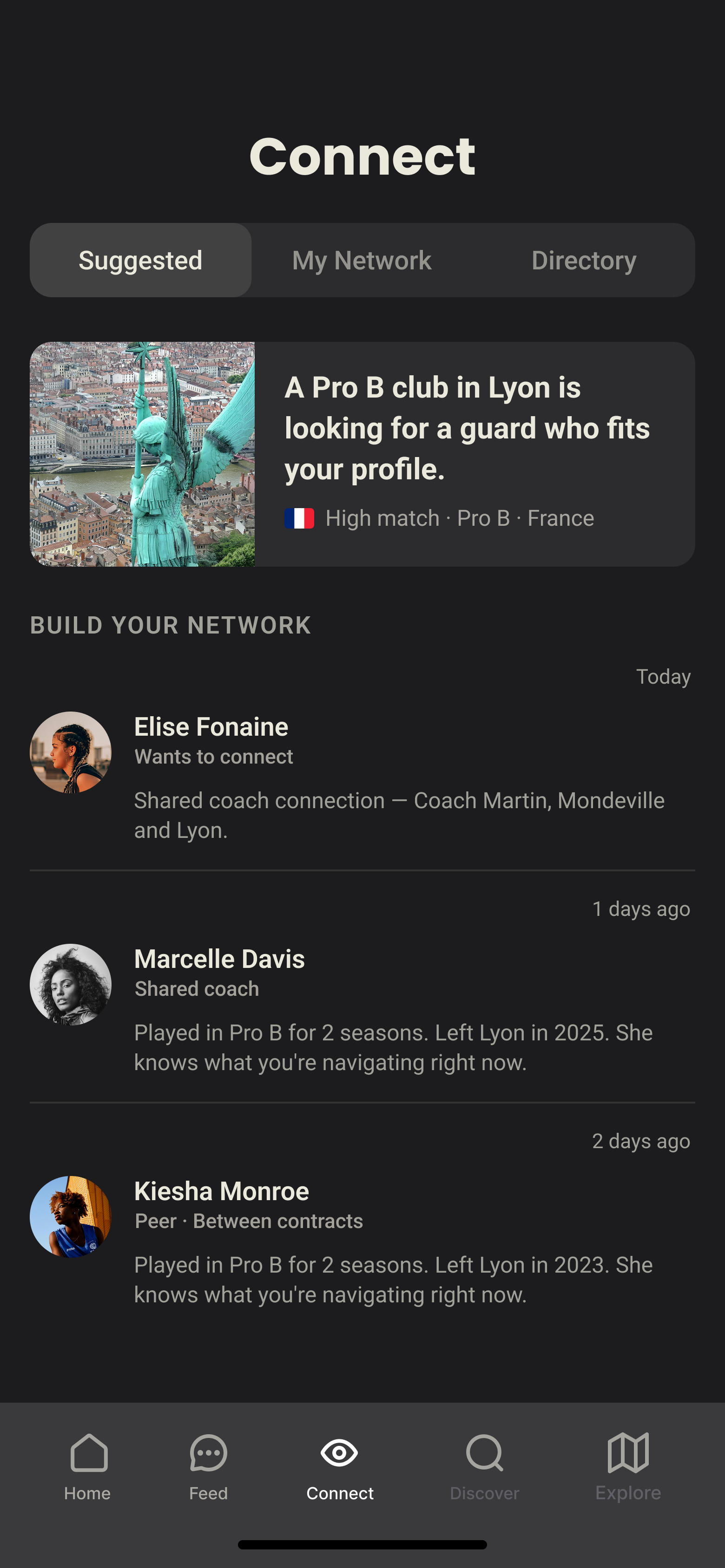
The first direction made it easy to move through a list of people. The final direction gives more attention to opportunities that may matter to the athlete now, explains why they're being surfaced, and lets her decide whether to explore.
The tradeoff is fewer immediate connections but more confidence that the ones she makes are worth making.
Designing around the athlete’s situation.
Before Connect can surface anything useful, it needs to understand what Gabby actually needs right now.
Her contract ended. She's looking for a team in France. That's a different set of needs than an athlete who just signed somewhere new and needs to build relationships fast, or one who's thinking about retiring and exploring coaching. Same platform. Completely different starting point.
Onboarding asks five questions to give Connect a real starting point.
Situation, not stage.

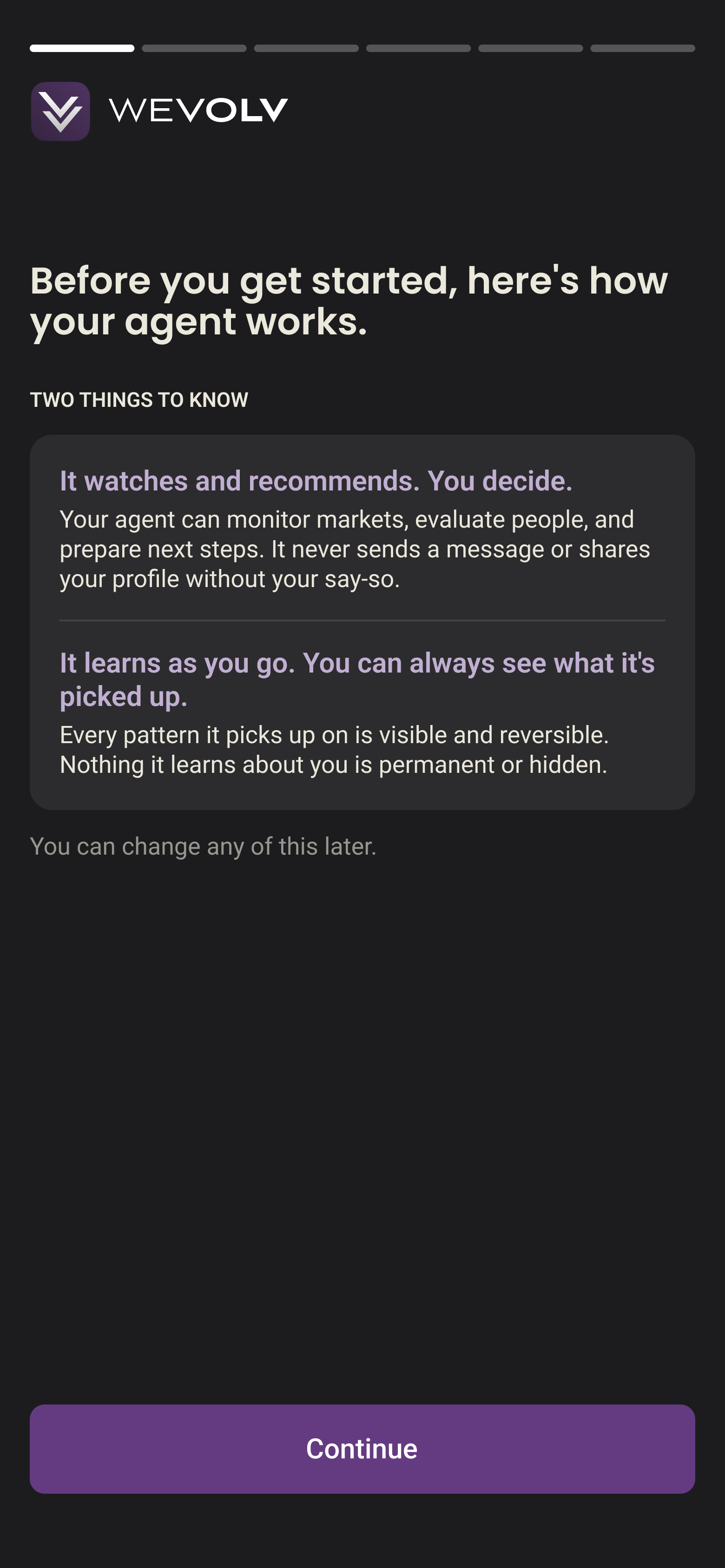
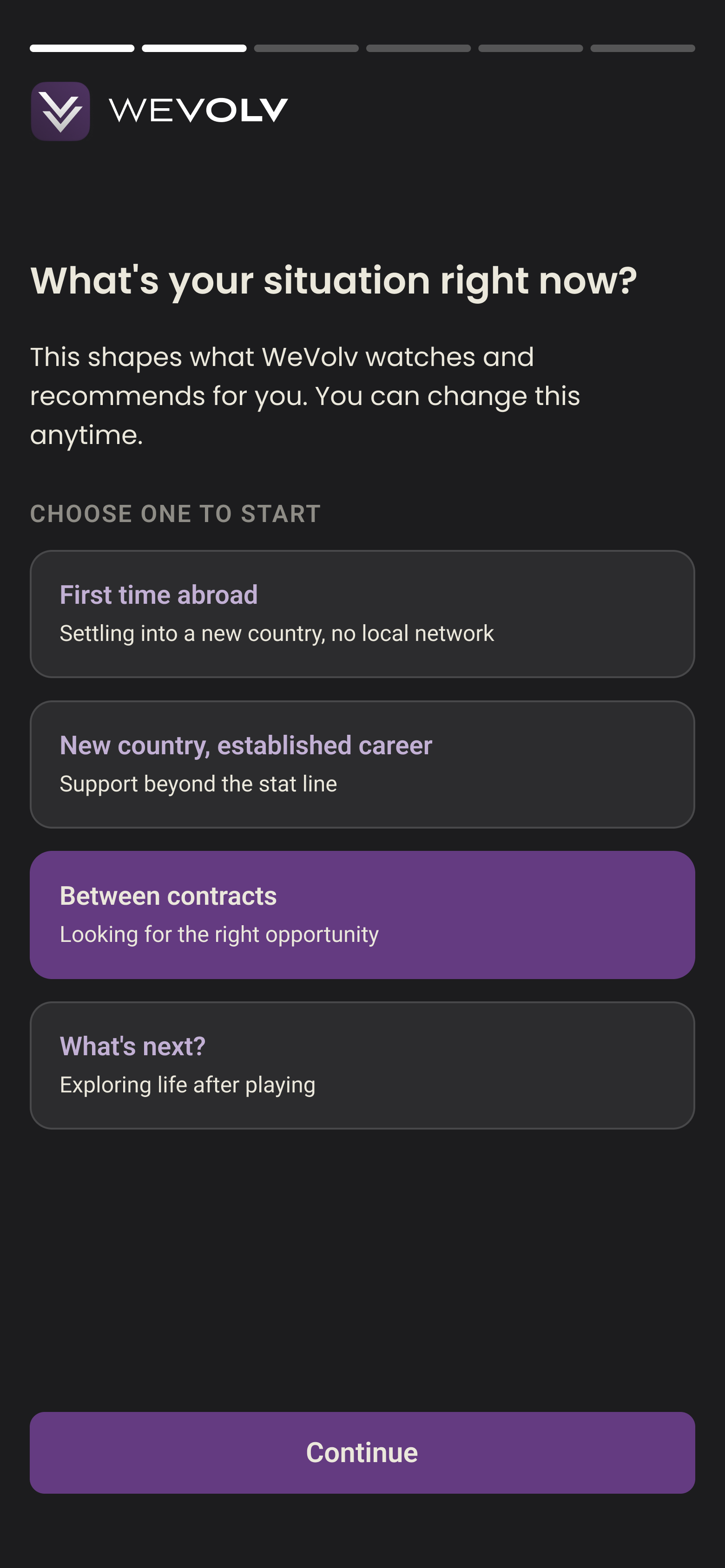
The first question isn't “what's your career stage", it's “What's your situation right now?" with four options: first time abroad, experienced playing abroad but new location, between contracts or exploring what's next. Career stage predicts almost nothing about what an athlete needs this week. Situation does.
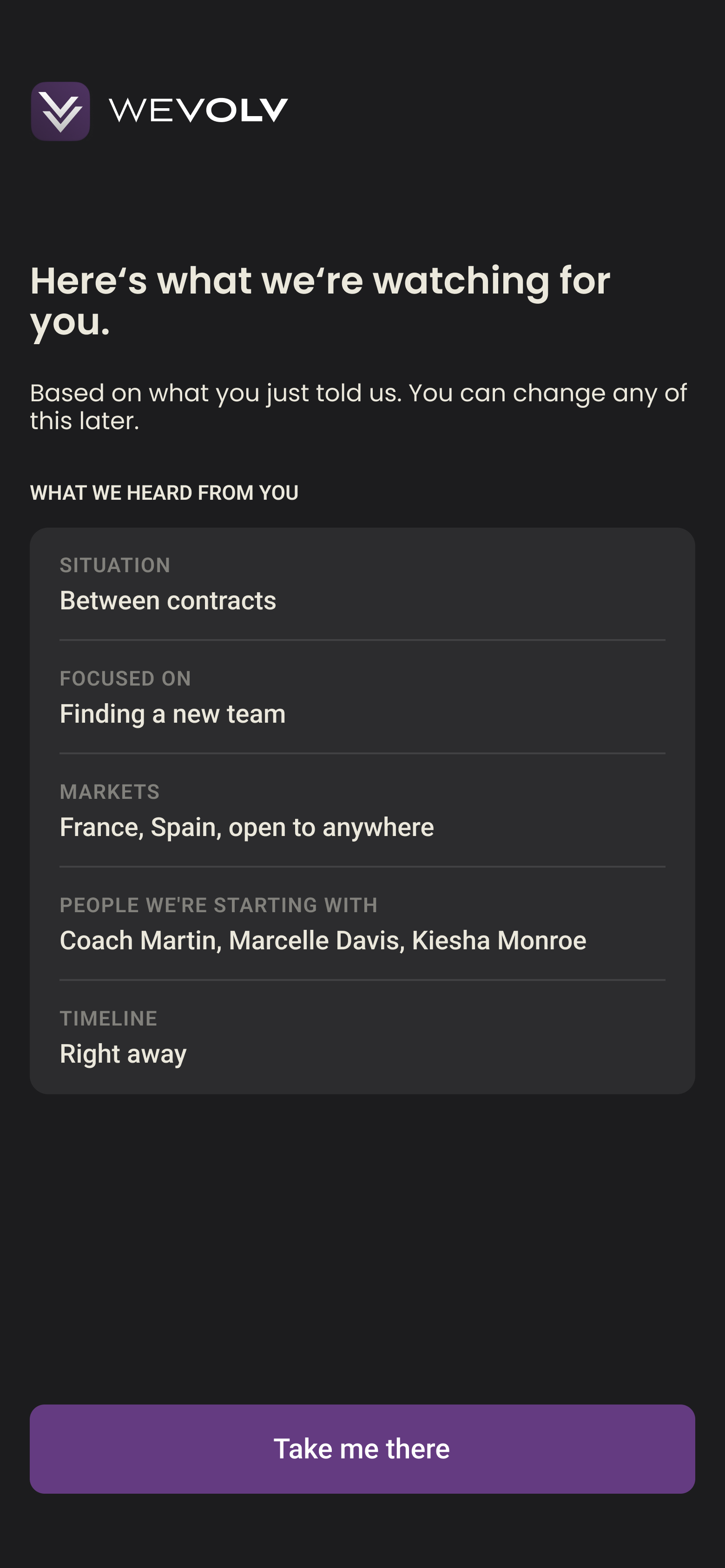
Every answer earns its place. Focus, markets, network, timeline each of the five changes what Connect actually shows her. Onboarding closes with a plain statement instead of a settings summary: “Here's what we're watching for you." A commitment, not a confirmation screen.
The decision happens before the message.
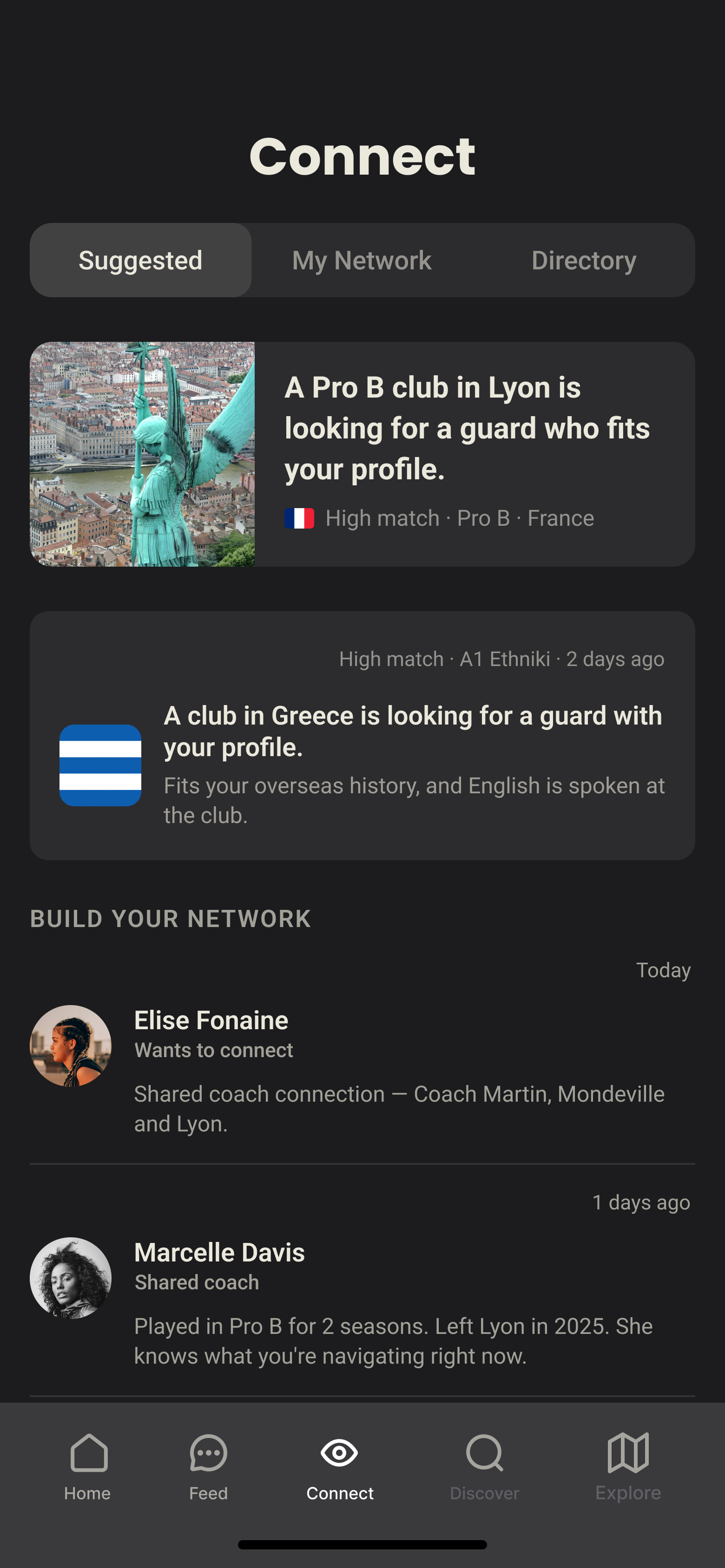
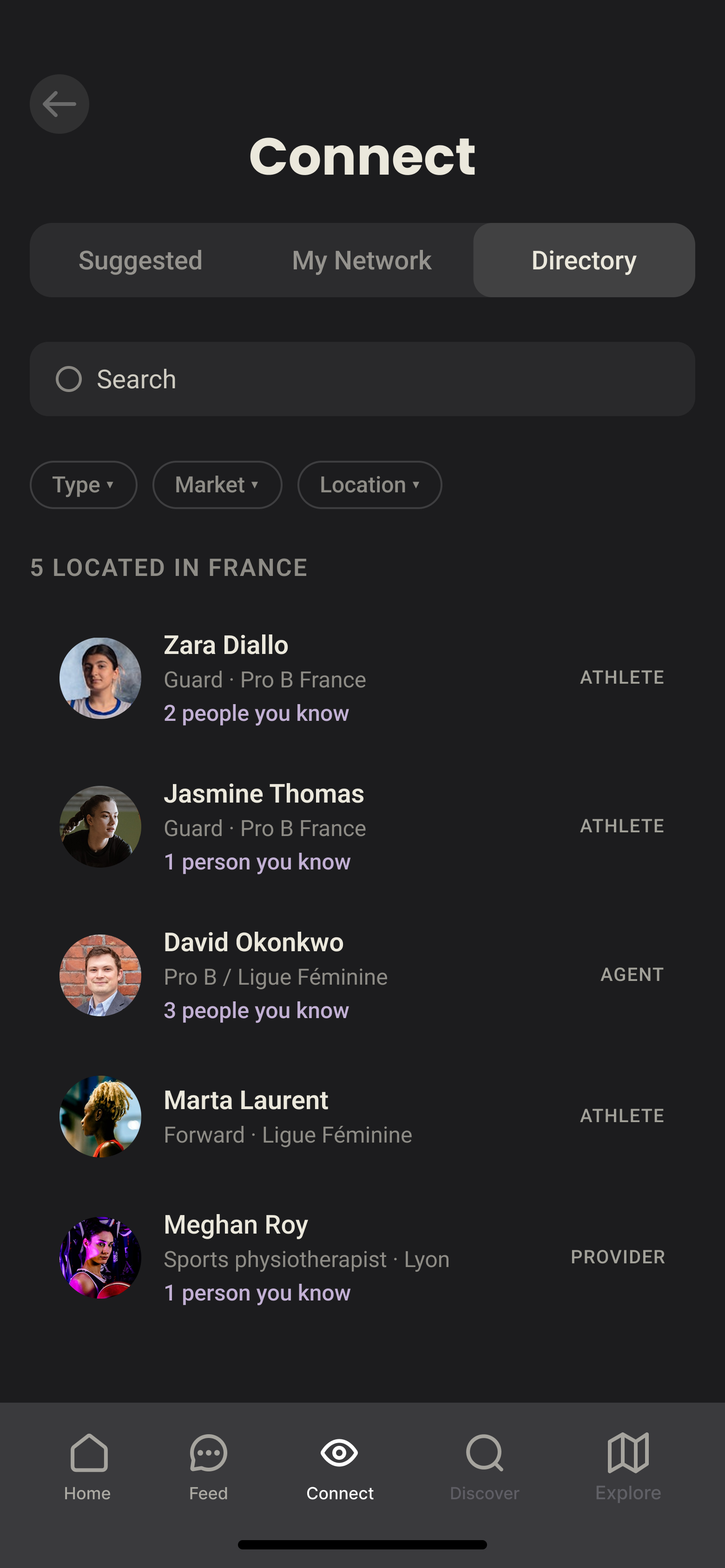
When Gabby opens Connect, she sees why someone is being surfaced not just who they are. A Pro B club in Lyon is looking for a guard with her profile. That's the starting point, not a cold recommendation.
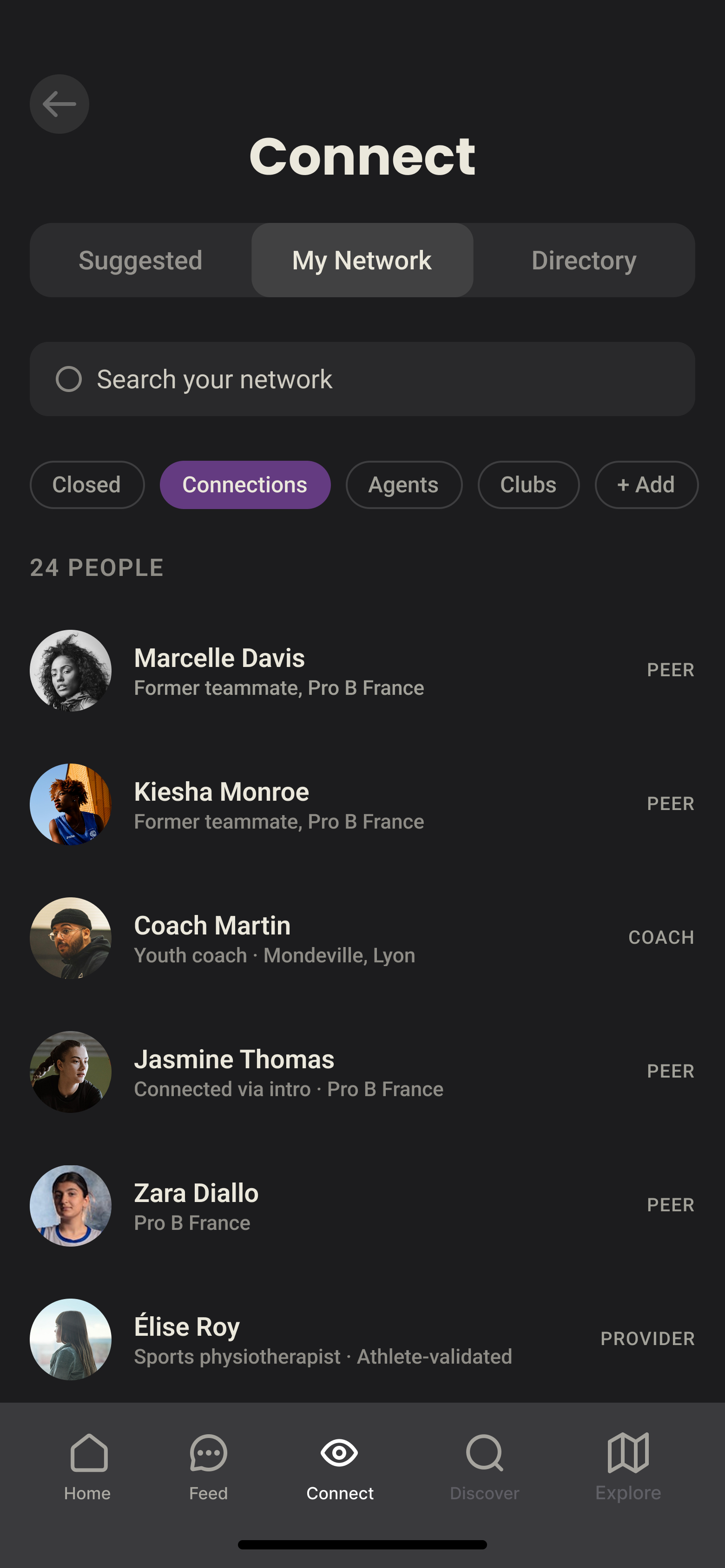
From there she can understand the relationship behind it. A shared coach. A mutual connection who played in the same league. Overlapping career history in a market she's considering. Context is what turns a stranger into someone with an actual reason to matter to her.
Then she can evaluate. Peer reviews, connection depth, track record the same signals she'd piece together informally over two to four weeks, visible in one place. Not a badge. Not a score. Evidence she can actually weigh.
When she's ready, she decides. Accept the intro or pass. Nothing forces a move she's not ready to make.
The product isn't deciding who Gabby should know. It's giving her enough context to decide for herself.
The system does the monitoring work Gabby can't do herself. Scanning for relevant opportunities, changes in her network, and signals worth her attention. It surfaces. She decides. That boundary was a design decision, not a technical default.
Not every signal needs a decision.
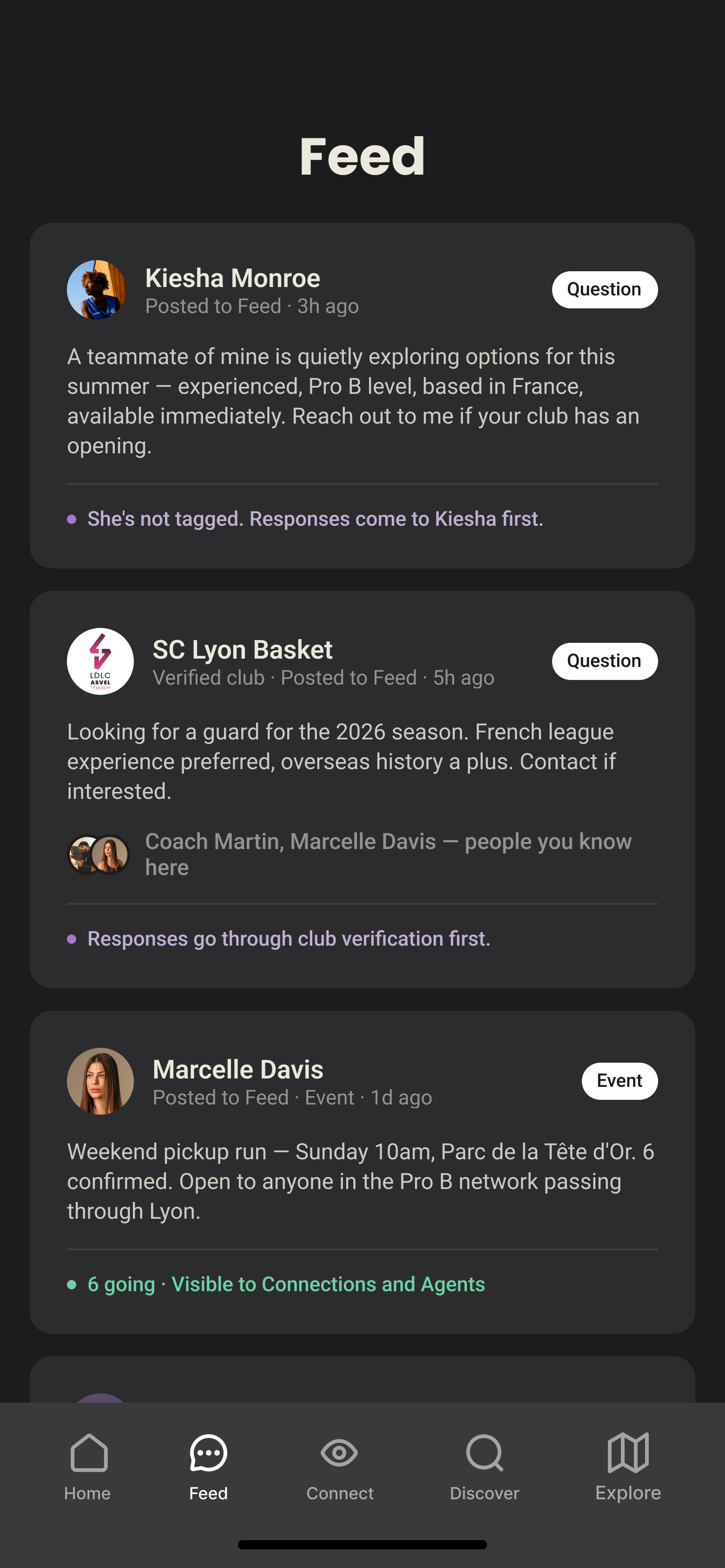
Connect is where Gabby evaluates relationships one at a time. Feed is where the broader network stays alive between those moments, opportunities shared, questions asked, updates posted by people she already knows or someone she may want to connect with because they are having a similar experience.
It's not trying to replace Instagram or WhatsApp. It's the layer that keeps her connected to her community without asking her to manage it.
Three kinds of signal, deliberately unsorted. A teammate quietly exploring summer options is network intelligence. Responses route to her, not a broadcast. A club posting an open guard spot is an opportunity signal from an organization, not a person. A weekend pickup run is pure social, no evaluation implied. Feed doesn't split these into tabs, because sorting them would imply they need different attention. They don't. They need different responses.
Profiles are built to answer one question: Do I have enough context to reach out?
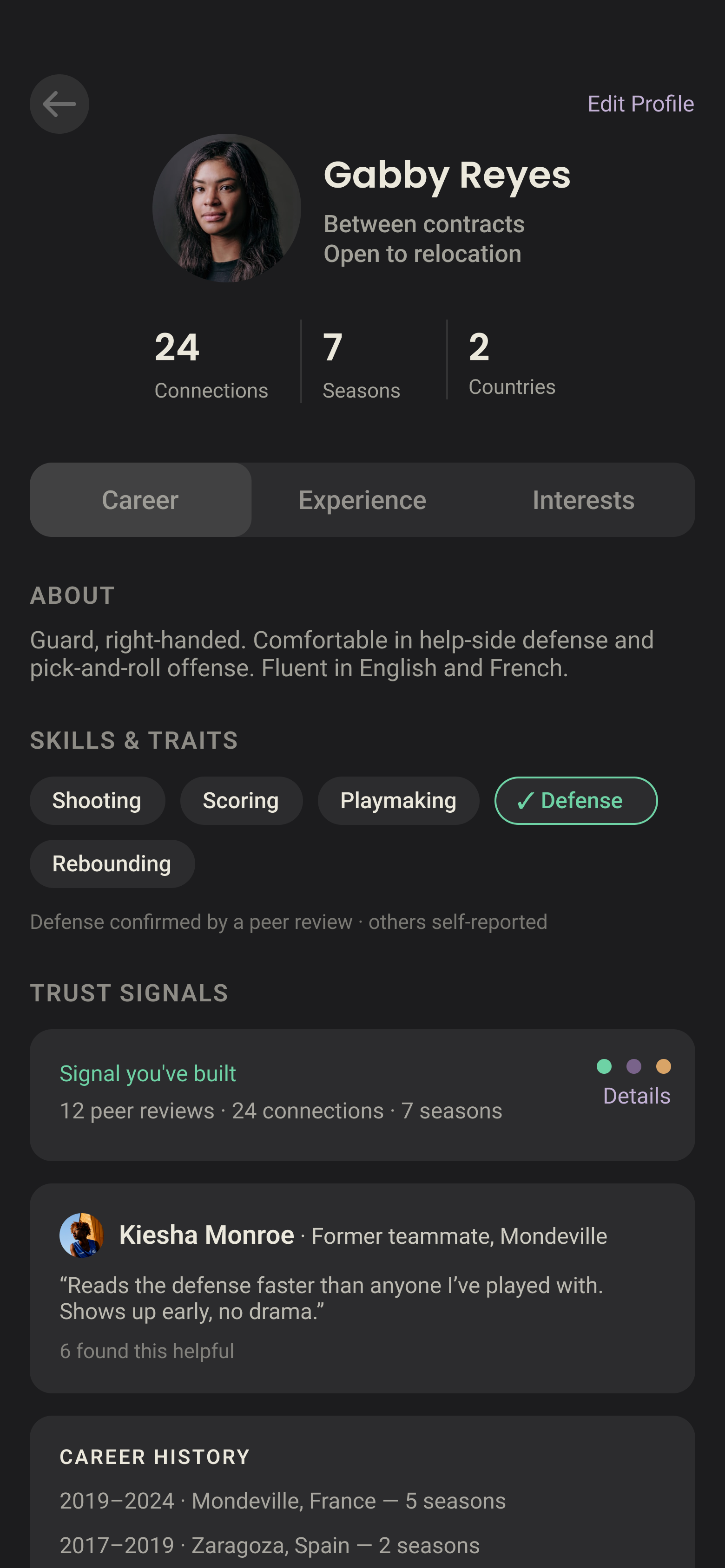
A profile should show who someone is, why they matter right now, how you overlap and who vouches for them. Everything else is noise. With clear context, athletes can confidently decide their next move: connect, ask for an intro or keep looking. Context earns the right to contact.
Connection before stats: Before loading heavy athletic data, the profile immediately highlights common ground “You both know Kiesha Monroe".
Honest skill tags: We visually separate self-reported skills from peer-verified ones. We don’t hide unverified skills; we are just transparent about what lacks proof.
Numbers vs. social proof: A stat like “12 peer reviews" shows aggregate trust, but a specific quote lets the user actually weigh the source.
Network proximity, not a percentage: Trust signals show Strong or Medium instead of a raw score, so the label carries meaning instead of false precision.

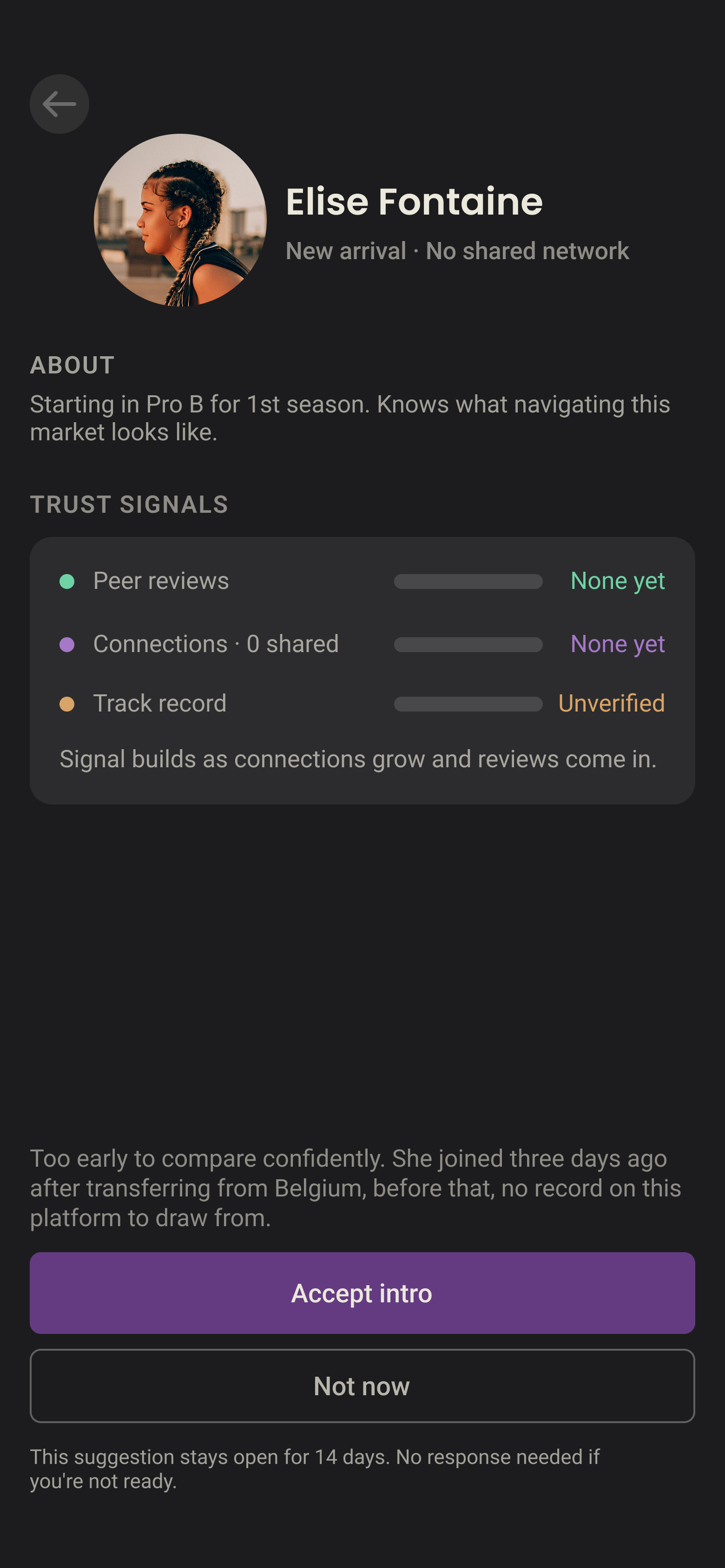
When there's no track record yet, WEVOLV says so directly: ‘Too early to compare confidently.' None yet beats a fabricated score.
Word of mouth, made visible.
When a Lyon club appears in Connect, Gabby needs more than a contact. She needs to understand the market. Discover surfaces that context. Leagues, clubs, visa requirements, what other athletes found when they got there, directly within the connection flow.
The agentic layer extends this further. Based on where Gabby is and who's in her network nearby, the system surfaces relevant people and places without her having to search. It looks. She decides what matters.
Explore and Trusted Services, local places and athlete-vetted service providers are the next phase.

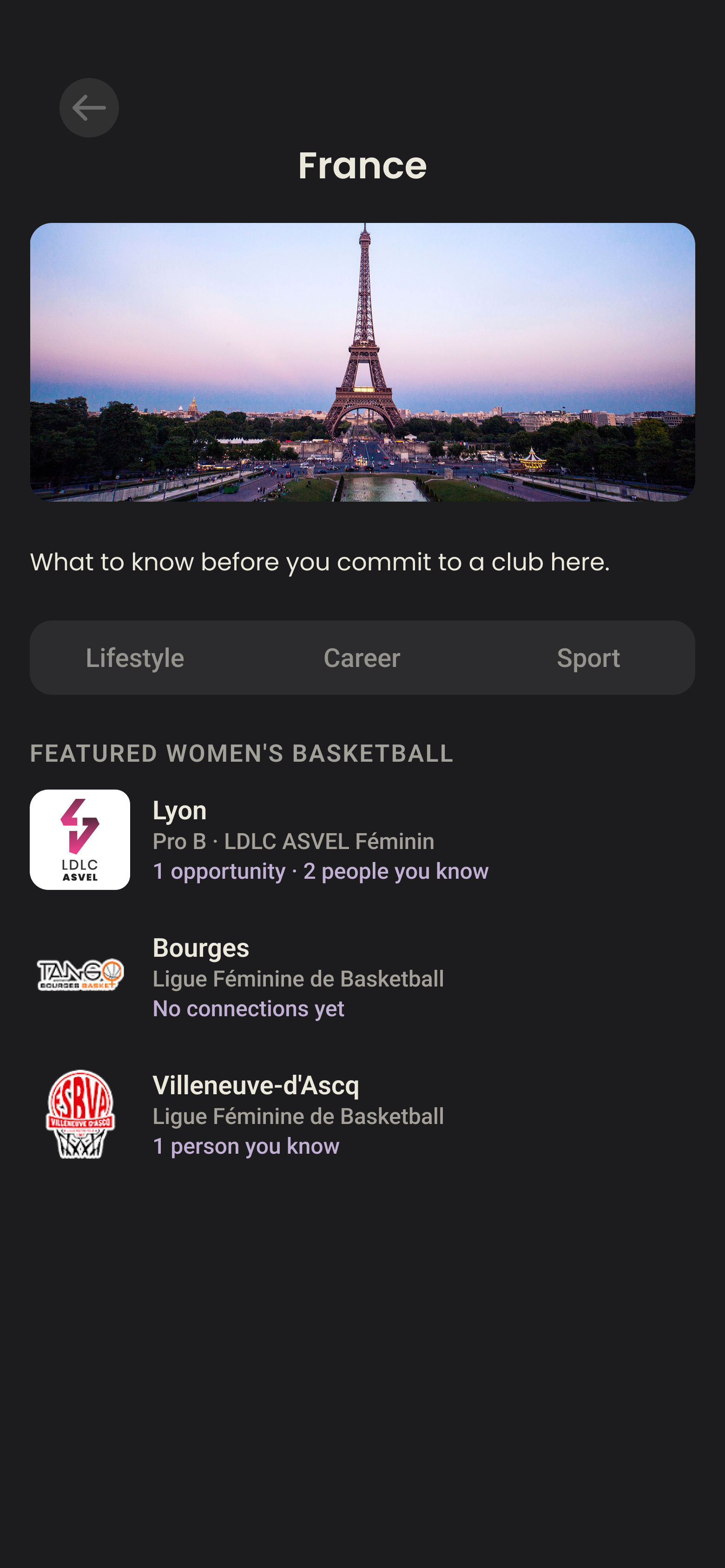
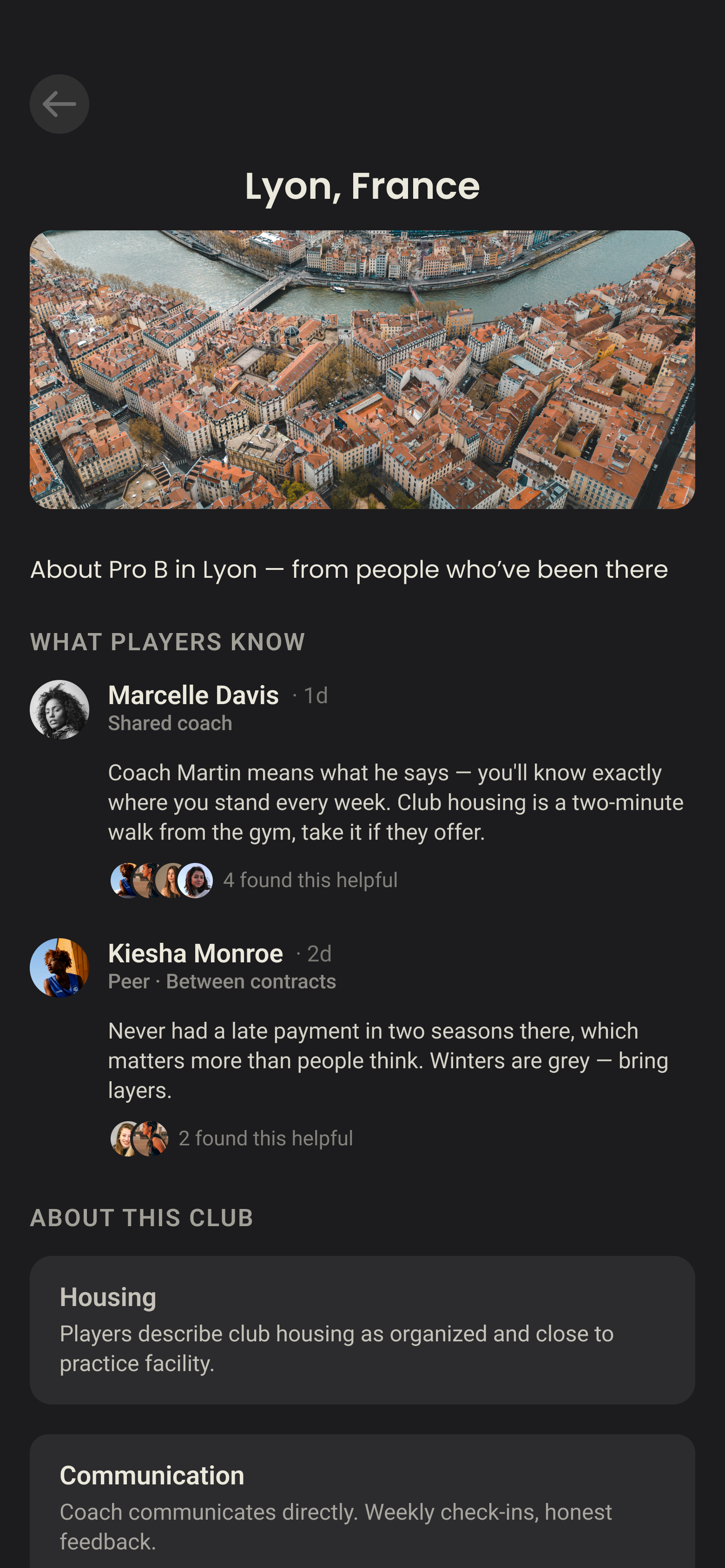
Discover narrows the way real evaluation actually narrows. A country overview leads to a specific league, which leads to a specific club and city and what's shown gets more concrete at each step. Broad market facts at the top, actual word-of-mouth from people who played there once she reaches the club level. That placement is deliberate. Testimony sits where Gabby is actually deciding, not earlier where it would just be noise she has to carry down through the funnel.
The agentic layer runs underneath the same structure. It looks at where Gabby already is and who's already in her network nearby, so she's not searching a market cold. The system still just recommends. She still decides what to do with it.
Wanting to be found and wanting to be exposed are not the same thing.
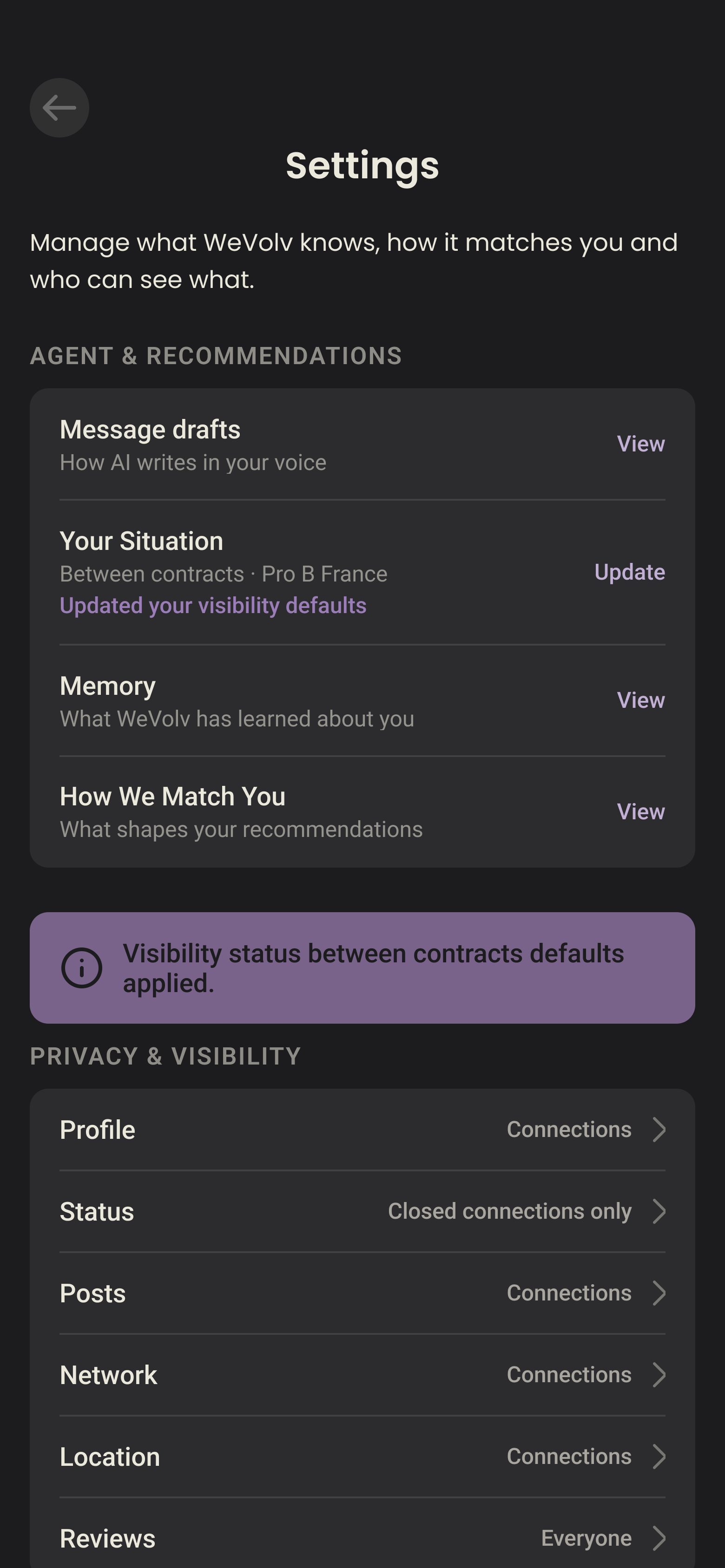
Gabby controls who sees her profile, who knows she's looking, and who can contact her. A club can be relevant to her without automatically getting access to her identity. The system can surface an opportunity. Gabby decides whether to be seen.
Visibility is part of the product experience not buried in account settings because the research showed athletes treat it as a protection mechanism, not a preference.
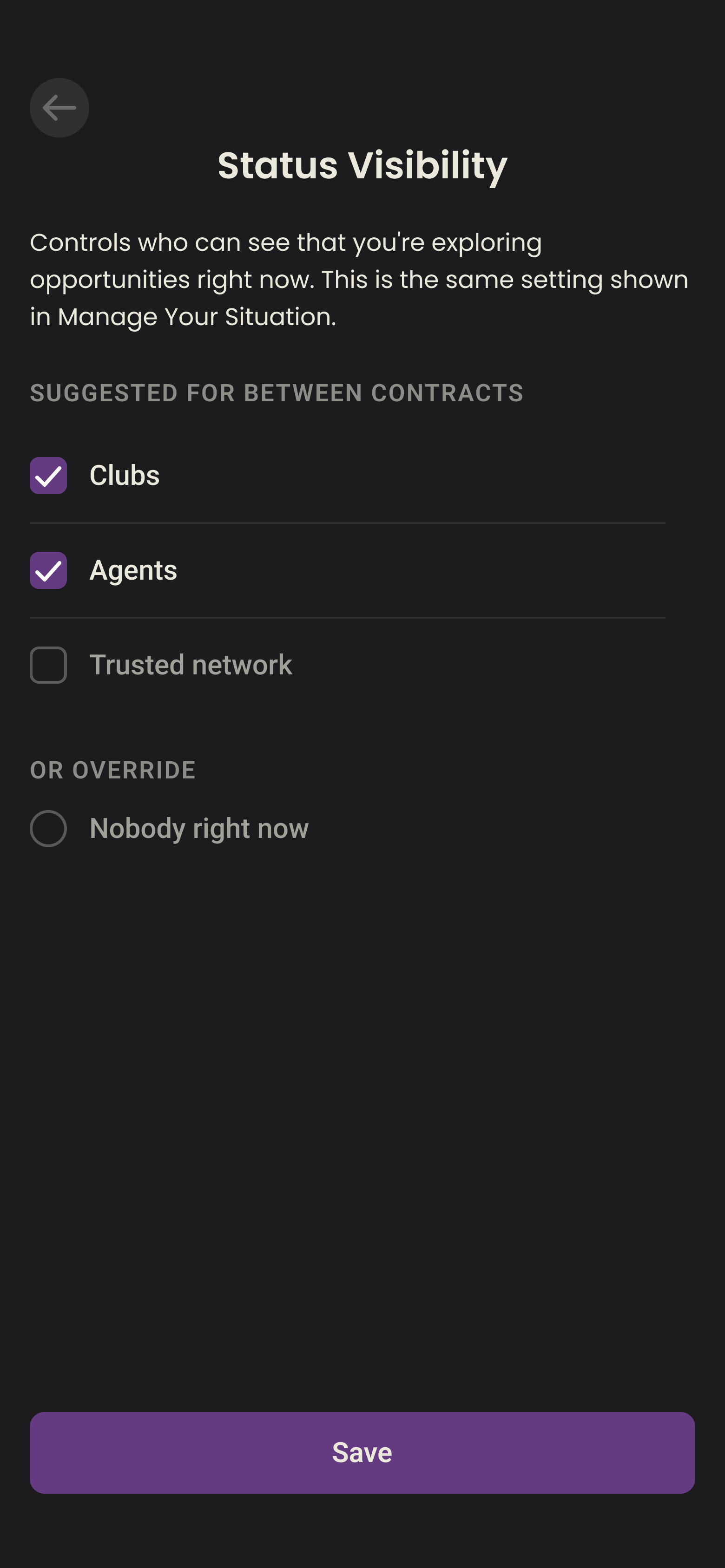
The default isn't blank, it's situation-aware. Between contracts, WEVOLV pre-checks Clubs and Agents and leaves Trusted network unchecked, with an override to “Nobody right now" if she wants it. The setting lives inside “Your Situation," next to Markets and Timeline, not in a separate settings menu three taps away.
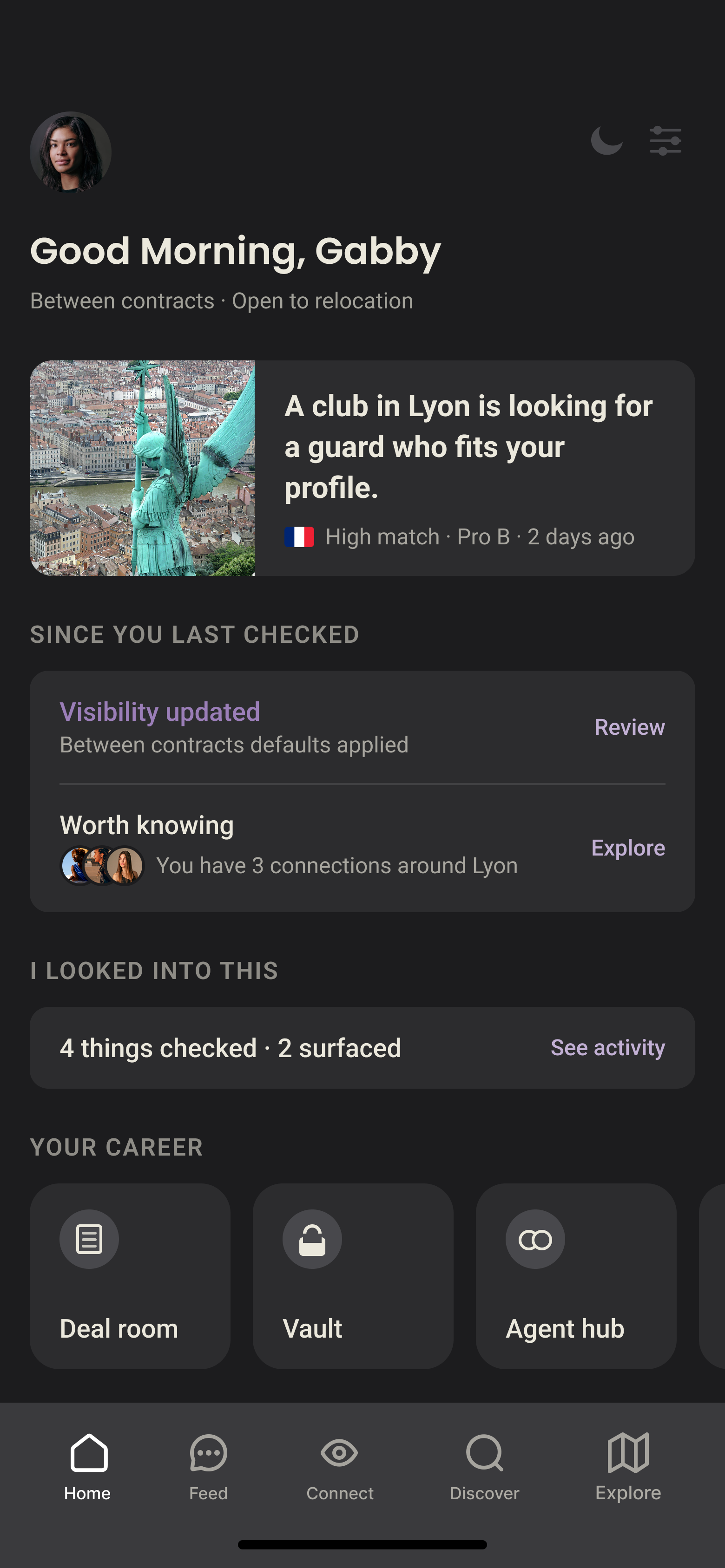
Building trust into interaction.
The AI capabilities introduced a core design challenge: how can the platform provide smart recommendations without becoming an opaque black box? Rather than hiding the technology or centering the entire interface around it, I designed the experience around three critical moments where data transparency directly protects Gabby’s control, privacy, and decision-making.
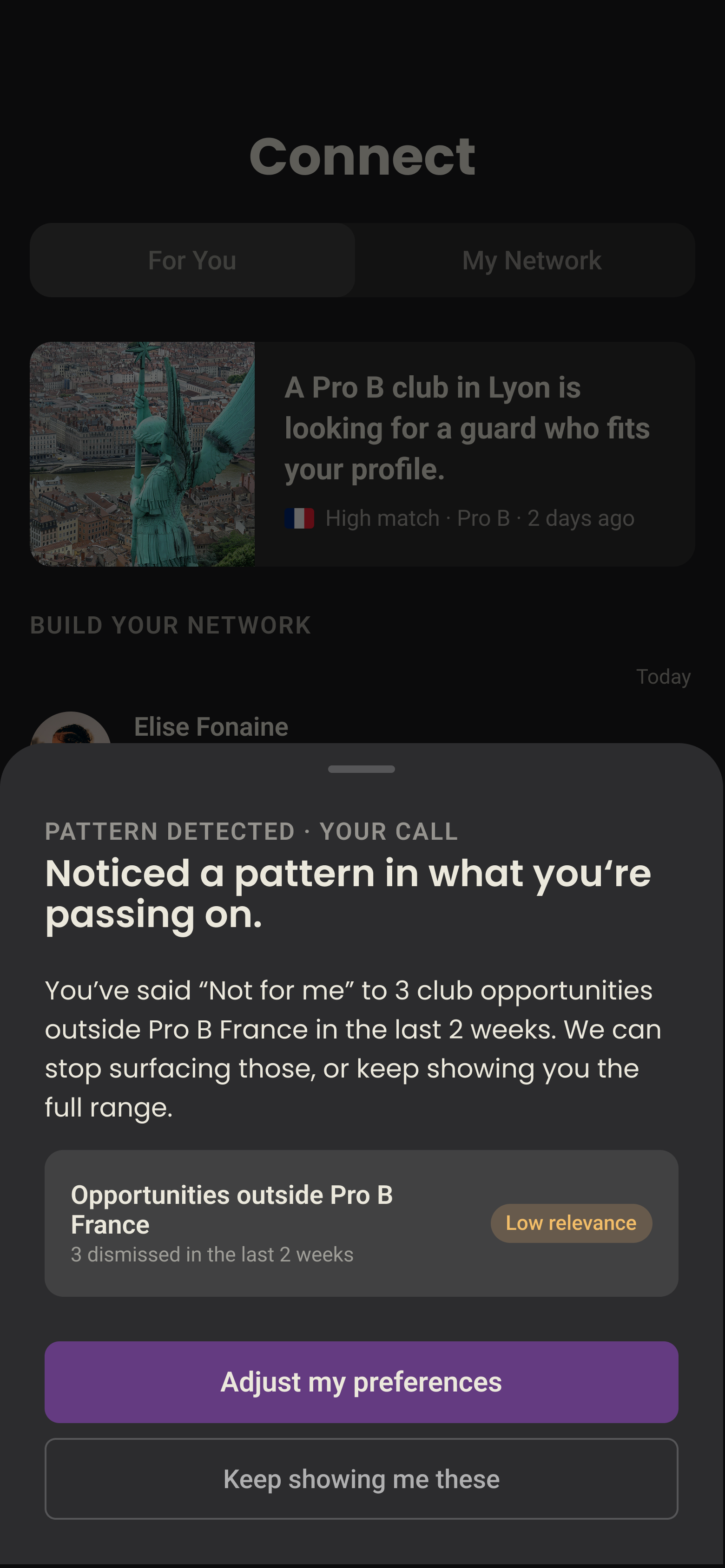
Correctability
It names the actual pattern instead of asking generically. “You've said ‘Not for me' to 3 club opportunities outside Pro B France in the last 2 weeks." Nothing changes until she responds.
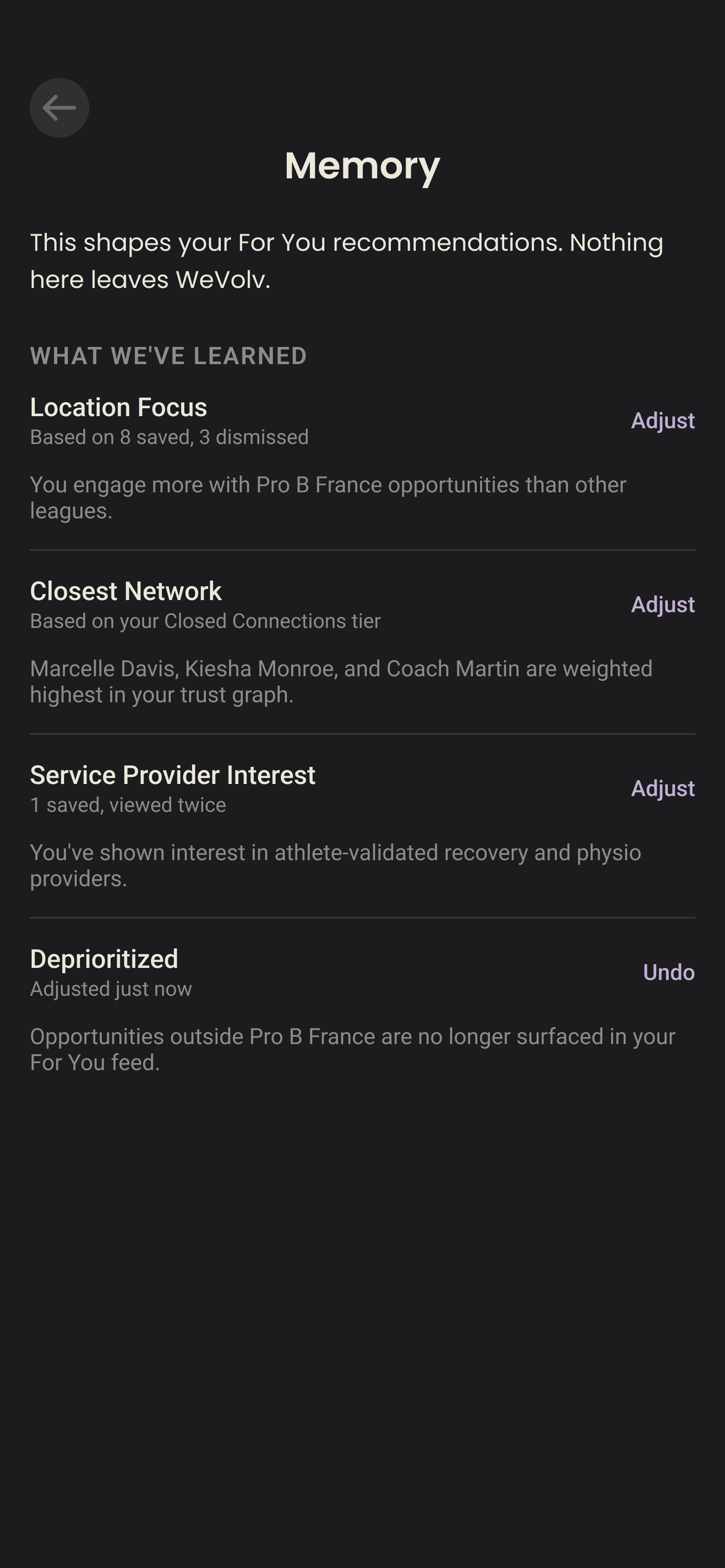
Memory Control
What's been learned lives on a page she can read: “Deprioritized, opportunities outside Pro B France no longer surface," undo included.
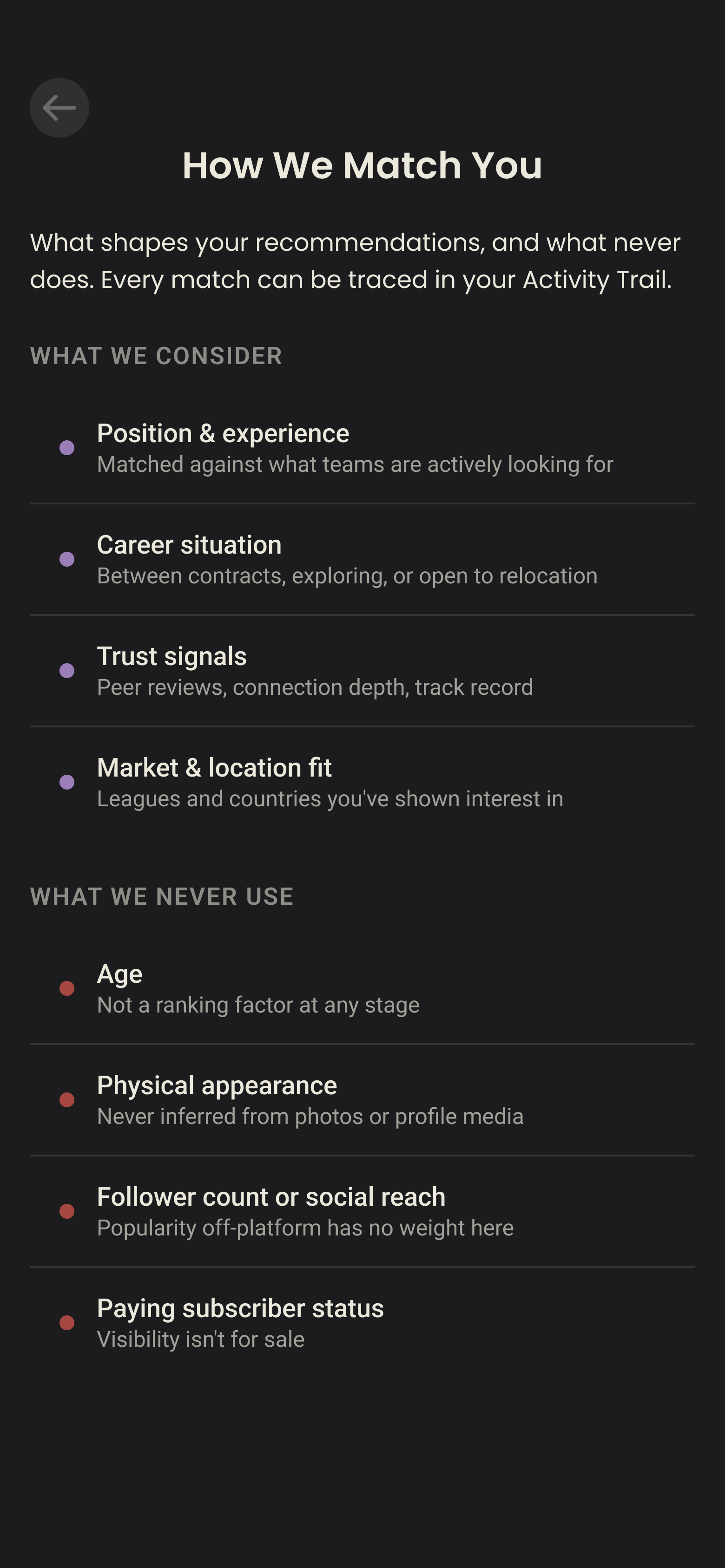
Fairness
No correction control here, on purpose. “How We Match You" lists what counts: position, situation, trust signals, market fit next to what never does, age, appearance, followers. Fairness is inspected, not adjusted.
Transparency
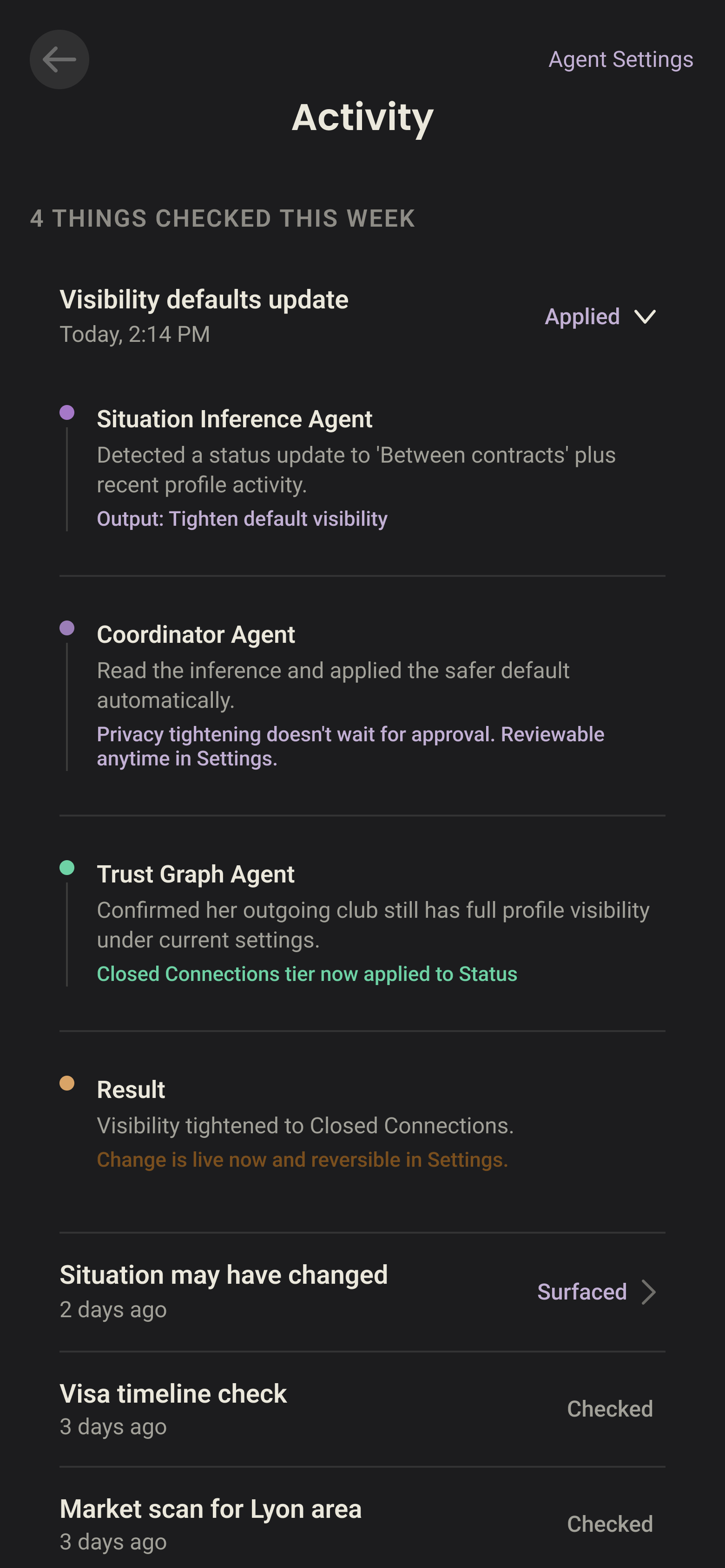
Every change traces back to the specific agent that made it. Situation Inference flagged her status change, Trust Graph confirmed who could still see it. Nothing is hidden and nothing is permanent.
Reflection
I started with a brief to help athletes make better connections. Research changed what that actually needed to mean.
Athletes already know how to communicate. What they need in unfamiliar markets is trusted context. Who someone is, how they're connected, what experience they have and whether reaching out makes sense. That shifted Connect from a messaging feature into a relationship decision-making experience. The rest of the product followed from that idea.
The goal isn't to make WEVOLV another place where athletes have to be social. It's to give them the context to know when a connection is worth making.